Read More Case Studies
Insights, ideas, and real-world results. From new ways of thinking about packaging to case studies that show how we’ve solved complex challenges.

Moquin Press printed 464,303 net sheets in 24 hours on a Heidelberg Speedmaster XL 106. A 90-day Lean program raised OEE from 42.8% to 48.8% without new equipment.
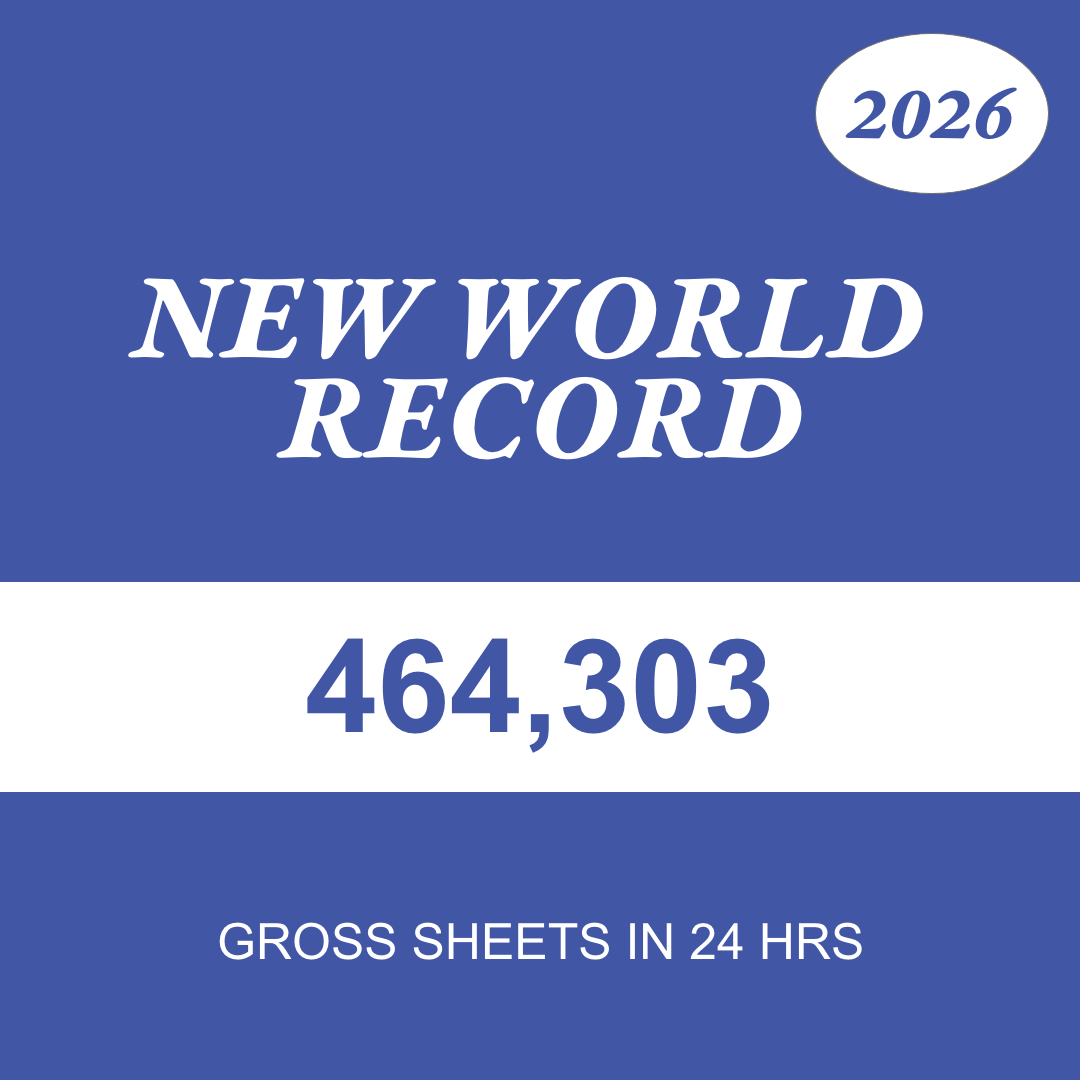
Moquin Press printed 464,303 net sheets in 24 hours on 60-lb. C1S label stock, setting a new production record on our Heidelberg Speedmaster XL 106.
We didn't get there with new equipment. We got there through a Lean Manufacturing overhaul of our pressroom: Kaizen (continuous improvement), SMED (faster changeovers), standardized work, visual management and real-time OEE (Overall Equipment Effectiveness) tracking. The goal was simple: eliminate micro-stoppages and variability, and turn shop-floor discipline directly into sheets per hour.
Breaking a record you already hold takes more than the equipment that got you there the first time. For us, "quality first, speed second" isn't a title to defend. It's something we re-earn every run.
Key facts at a glance
Record: 464,303 net sheets in 24 hours
Press: Heidelberg Speedmaster XL 106
Substrate: 60-lb. C1S label stock
Method: 90-day Lean program, no capital expenditure
Verifiedby: Heidelberg Performance Portal audit, and documented in an independent Kaizen Institute case study
In 90 days (December 2025 to March 2026), the program raised OEE on our XL 106 from 42.8% to 48.8% and cut average makeready from 23 to 17 minutes, without buying new equipment or adding labor.
We ran about 12 changeovers a day across two 8-hour shifts,so makeready was our biggest opportunity to win back press time. A six-person team worked through five levers:
1. Kaizen(continuous improvement). We diagnosed losses with A3 problem solving, Ishikawa diagrams and 5 Whys. The root causes were micro-stoppages, long makereadies and inconsistent processes. We ranked fixes with a GUT matrix and tracked them in PDCA cycles with named owners and deadlines.
2. SMED(Single-Minute Exchange of Die). We video-timed full changeovers and moved 11 tasks off the press, including plate staging, ink-key presetting and wash-up kit prep. A pre-kitting station beside the delivery stages the next job's plates and color targets while the current job runs. That alone removed about 4 minutes of downtime per changeover.
3. Standardizedwork. Every changeover now follows the same 14-step sequence, so operator know-how lives in a documented standard instead of in individual heads.
4. Visualmanagement. A color-coded, laminated work standard is mounted on the press console, and 5S keeps tools and materials where crews expect them.
5. Real-timeOEE tracking. OEE moved from a separate report into the daily routine, reviewed in 15-minute stand ups, so the team sees availability, performance and quality losses as they happen.
What is OEE? OEE(Overall Equipment Effectiveness) measures how much of a machine's planned time produces good output. It multiplies availability × performance × quality. A higher OEE means fewer stops, faster running and less waste.
The record was verified through the Heidelberg Performance Portal in April 2026: the XL 106 ran at 99.45% of its nominal capacity with no critical failures recorded.
The Kaizen Institute documented the full program in its case study, Operational excellence in printing and packaging: the Moquin Press Lean case. The project was also recognized at the KAIZEN™ Awards North America 2026 in the Operational Breakthrough category.
The case study frames why this matters beyond our plant. Printing and packaging buyers want smaller, more varied orders, shorter lead times and more customization, all of which squeeze efficiency and margins. In that market, getting more from existing equipment, without capital investment, is a real competitive advantage.
More capacity on the same press means shorter lead times and more room for smaller, customized runs, with the same quality standard on every sheet.
Moquin Press has printed packaging, labels and commercial print since 1985 from Belmont, California, serving beauty, food, beverage and CPG brands across North America. Our managers are Six Sigma Yellow Belt certified and working toward Lean Practitioner certification, because this record is a baseline, not a finish line.
Quality first, speed second. We'll keep re-earning both.
Geta quote for your next label or packaging run
Moquin Press printed 464,303 net sheets in 24 hours on a Heidelberg Speedmaster XL 106 using 60-lb. C1S label stock.
SMED (Single-Minute Exchange of Die) is a Lean method that shortens changeovers by moving setup tasks off the press so they happen while the current job runs. At Moquin Press, SMED and standard work cut average makeready from 23 to 17 minutes.
Reduce changeover time, eliminate micro-stoppages, standardize work and track OEE daily. Moquin Press raised OEE from 42.8% to 48.8% in 90 days with these steps.
Yes. Moquin Press reclaimed 312 press hours a year and added an estimated $1.69M in annualized revenue through Lean improvements, with no capital expenditure.
Moquin Press is headquartered in Belmont, California, and prints labels, packaging and commercial print for brands across North America.

From first samples to full production, we’re here to make every step easier.
Insights, ideas, and real-world results. From new ways of thinking about packaging to case studies that show how we’ve solved complex challenges.
Manage how this site uses cookies. Essential cookies are always on.
Required for the site to function. Always active.
Google Analytics 4, HubSpot, and PostHog. Helps us understand site traffic. PostHog may also record on-page activity such as clicks, scrolling, and mouse movement (session replay) to help us diagnose usability issues.
Google Ads and Apollo.io. Apollo attempts to identify individual visitors and their employer using third-party business data, for sales and marketing outreach. Turning this off is your opt-out right.

